Don't miss Ryan Smith's live webinar: Introduction to Epigenetic Methylation
Now June 17th at 5:00pm PT
Ryan Smith presents an Introduction to Epigenetic Methylation: why it is the best age-related biomarker, and how to use it in clinical age management.
Aging is the number one risk factor for almost all chronic diseases. However, the wide phenotypic variation between has always kept chronological age from being a reliable clinical biomarker. As a result, aging has always been difficult to objectively assess. Now, with the advent of new multi-omic diagnostics such as epigenetics, transcriptomics, and proteomics, we now have ways to effectively assess a patient's aging rates and vet the effect of many anti-aging treatments. In particular, many advances have been made to epigenetic testing and the algorithms that can interpret these DNA markers to health related risks and outcomes. We can now use these epigenetic algorithms to assess immune system function, telomere length, senescence, instantaneous aging rate, and of course how all of these metrics relate to the risk of developing chronic disease.
This webinar will discuss the history of this new field, how many are using it, and the best ways to reverse epigenetic aging.
Policy & Advocacy FDA Threatens to Ban Critical Toxin Protection Supplement
On shaky legal grounds, the FDA has targeted N-acetylcysteine (NAC), an important antioxidant supplement. Action Alert!
The FDA has declared that NAC, a vital antioxidant with a number of important health benefits, is not a legal dietary supplement. This is a direct threat to a supplement that many integrative doctors and patients rely on to address a variety of health conditions. We must ensure the FDA doesn’t remove these supplements from the market.
In a slew of warning letters sent last year, the FDA targeted a number of supplement companies marketing “unapproved” cures for hangovers—which the agency absurdly considers to be a “disease.” Some of these products contain NAC. In the letters to those companies, the FDA states that NAC does not meet the legal definition of a supplement because it was approved as a drug in 1963; according to federal law, any substance approved as a drug before it was sold as a supplement cannot be sold as a supplement. All of this means that the status of NAC as a supplement is currently in dispute.
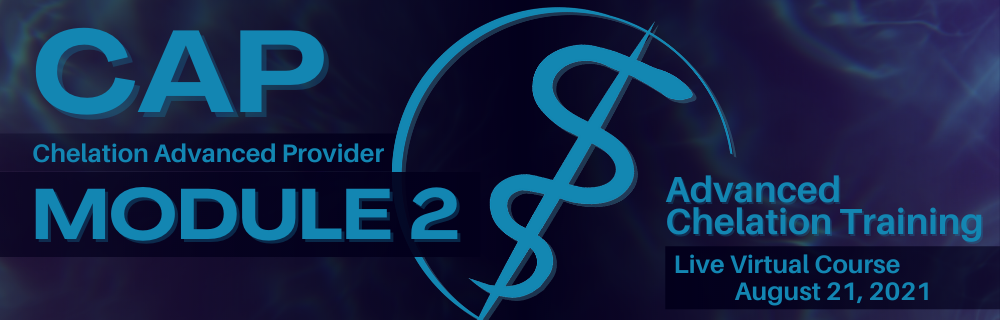
Newly announced second date offering for our Advanced Chelation Training: Module 2! This is an excellent opportunity for those who were unable to attend the first virtual course this past month. Featuring instruction from Dr. Dorothy Merritt, M.D., Dr. Allen "Buddy" Green, M.D., and Dr. Rita Ellithorpe, M.D.